
Introduction
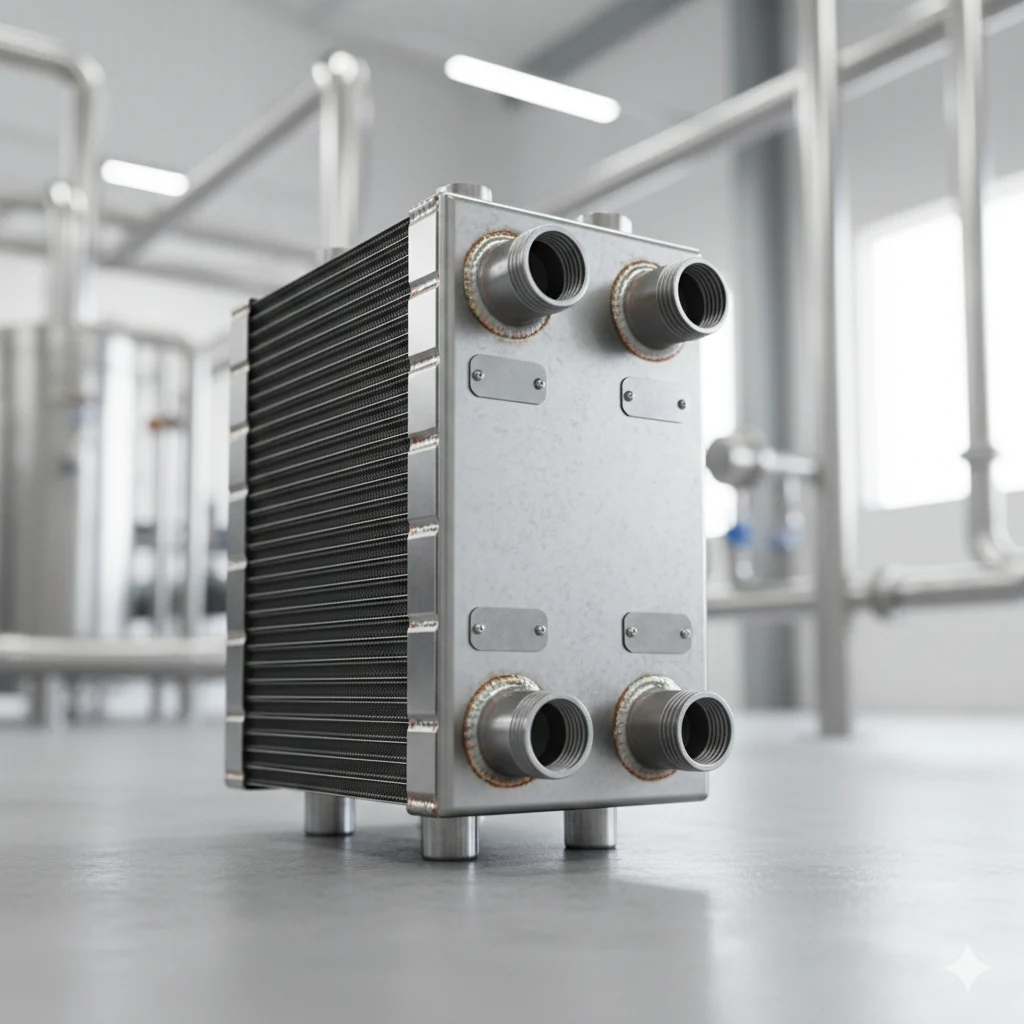
Brazed plate heat exchangers (BPHEs) are highly efficient devices that excel at transferring heat between two fluids. Unlike traditional shell-and-tube or gasket plate heat exchangers, BPHEs consist of corrugated metal plates brazed together to form a compact, leak-proof network of channels. This unique design maximizes heat transfer surface area, resulting in exceptional performance and energy efficiency.
How Brazed Plate Heat Exchangers Work
A BPHE operates on a simple yet effective principle. Hot and cold fluids are kept separate, flowing independently through distinct channels within the exchanger. The corrugated plates facilitate turbulent flow, enhancing heat transfer between the two fluids. As the hot fluid passes through its channels, it releases heat to the metal plates, which in turn transfers it to the cold fluid flowing through adjacent channels. This continuous heat exchange process enables precise temperature control and optimization.
Advantages of Brazed Plate Heat Exchangers
- High Efficiency: The corrugated plate design and turbulent flow maximize heat transfer, resulting in significant energy savings compared to other heat exchanger types.
- Compact Size: BPHEs have a remarkably small footprint, making them ideal for space-constrained applications.
- Low Maintenance: With no gaskets or seals to replace, BPHEs require minimal maintenance and downtime.
- Durability: The brazing process creates a robust and leak-proof unit capable of withstanding demanding operating conditions.
- Lightweight: BPHEs are generally lighter than other heat exchanger types, simplifying transportation and installation.
- High Thermal Performance: They can handle high temperatures and pressures, expanding their application range.
- Flexible Design: BPHEs can be customized to meet specific requirements, ensuring optimal performance in various industries.
Applications of Brazed Plate Heat Exchangers
BPHEs find widespread applications across numerous industries:
- Food and Beverage: Pasteurization, sterilization, cooling of products, and heat recovery.
- Chemical Processing: Heat recovery, evaporation, condensation, and reaction cooling.
- HVAC: Chillers, heat pumps, air handling units, and energy recovery ventilation systems.
- Power Generation: Oil coolers, charge air coolers, aftercoolers, and heat recovery systems.
- Renewable Energy: Solar thermal systems, geothermal heat pumps, and biomass power plants.
- Data Centers: Liquid cooling systems for high-density computing equipment.
- Automotive Industry: Oil coolers, charge air coolers, and engine cooling systems.
Comparison with Other Heat Exchanger Types
| Feature | Brazed Plate Heat Exchanger | Shell-and-Tube Heat Exchanger | Gasket Plate Heat Exchanger |
| Efficiency | High | Medium | High |
| Compactness | Very High | Low | Medium |
| Maintenance | Low | High | Medium |
| Cost | Low | Very High | Low |
Choosing the Right Brazed Plate Heat Exchanger
Selecting the appropriate BPHE involves considering several factors:
- Fluid types and properties
- Temperature and pressure ranges
- Required heat transfer capacity
- Footprint limitations
- Cost
Working with experienced manufacturers can help determine the optimal BPHE for your specific application.
Conclusion
Brazed plate heat exchangers offer a compelling combination of efficiency, compactness, and durability, making them a preferred choice for a wide range of industries. Their ability to optimize heat transfer while minimizing energy consumption and maintenance requirements positions them as a valuable asset in modern engineering and process design.
Should you have any questions, kindly contact us.