
Why Safe Fluid Handling Starts with Pump Selection
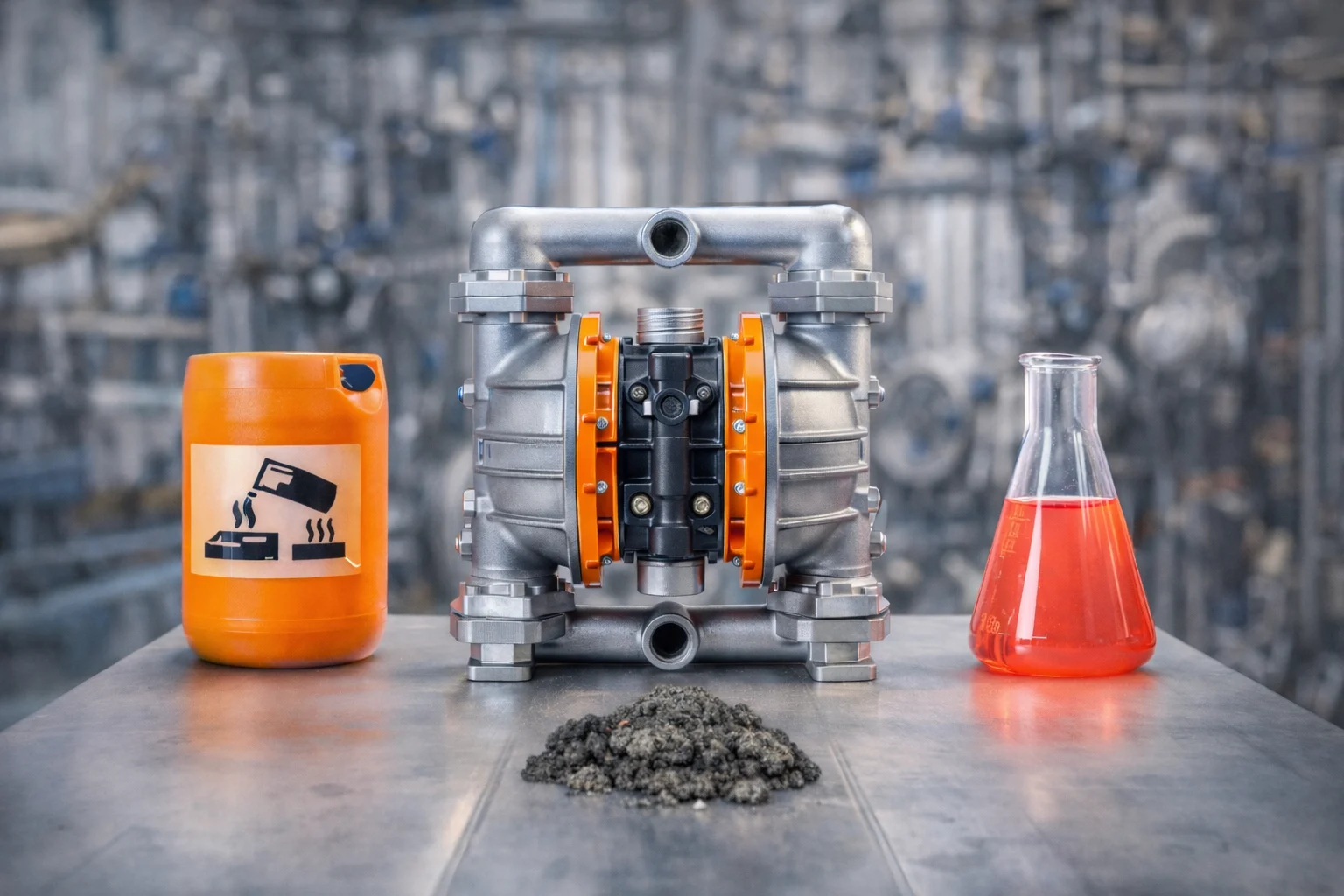
When we select an air-operated double-diaphragm pump, we are usually dealing with a service where product compatibility, containment, and operating reliability matter as much as flow rate. Corrosive chemicals can attack housings, balls, valve seats, and diaphragms. Abrasive slurries can accelerate wear across wetted components and check valve assemblies. Shear-sensitive fluids can change consistency or lose product quality if transfer is too aggressive. That is why safe handling starts with the pump design itself, not with installation corrections after commissioning.
For these duties, we need to look at more than nominal capacity. We need to confirm fluid chemistry, solids size, solids loading, viscosity, temperature, suction condition, discharge pressure, and the consequences of diaphragm failure or loss of air supply. In many plants, poor pump selection does not show up immediately as a no-flow condition. It shows up later as unstable flow, leakage risk, excessive air use, short maintenance intervals, or inconsistent product transfer.
Why This Pump Type Is Used For Difficult Media
A diaphragm pump is often specified where we need positive displacement transfer without mechanical seals, close-coupled electric drives, or complex priming arrangements. In air-operated designs, reciprocating diaphragms move fluid through alternating suction and discharge cycles, while compressed air provides the driving force. That makes the pump suitable for intermittent transfer, drum unloading, chemical transfer, sump duties, and solids-bearing applications where self-priming and dry-run tolerance are important.
For corrosive service, material selection is critical. The diaphragm elastomer, manifold material, valve ball material, and seat construction must all match the actual chemical conditions, including concentration and cleaning exposure. For abrasive service, internal velocity, check valve wear, and diaphragm cycle rate become major factors in service life. For shear-sensitive fluids, the goal is controlled transfer without excessive agitation, unstable stroking, or unnecessary recirculation.
What Needs To Be Checked Before Finalising The Specification
When we size a diaphragm pump in Malaysia, we should treat the system as a whole, not just the pump body. Suction lift, flooded suction, pipe diameter, and air regulator stability all affect actual field performance. A pump that looks adequate on paper can still lose efficiency if the suction line is undersized, the air supply is wet or unstable, or the discharge arrangement creates avoidable pressure fluctuation.
We also need to check solids-handling capability against the actual particle profile, not just the average slurry description. Large or irregular solids can interfere with valve seating and reduce capacity. Viscous media may require a lower cycling speed to maintain fill efficiency. Corrosive fluids may demand non-metallic construction or carefully selected alloys depending on the process environment. In hazardous or variable-duty areas, compressed-air operation also gives us an advantage by eliminating the need for an electrical motor at the pump location.
How Safe Operation Depends On The Installation
An air-operated diaphragm pump in Malaysia should be selected with the installation philosophy in mind. We need clean, regulated compressed air, proper exhaust handling, maintenance isolation, and suction piping that ensures consistent chamber filling. If the pump is used for unloading chemicals or transferring hazardous liquids, we also need to think about containment, maintenance access, and how quickly wearing parts can be replaced during a shutdown window.
Safety is not only about preventing leaks. It is also about preventing unstable transfers, deadheading issues, dry-running under abnormal conditions, and maintenance practices that expose technicians to unnecessary risk. The right arrangement reduces operator intervention and gives the plant a more stable transfer system.
Why Work With Us At Thermac Engineering
When you choose us for your air-operated double diaphragm pump requirement, we support you from application review to after-sales service:
- We help you assess duty, fluid compatibility, suction condition, and installation requirements before selection.
- We support AODD applications for corrosive, abrasive, viscous, and solids-bearing media where safe transfer matters.
- We supply spare parts and retrofit support for various brands, helping you maintain existing installed equipment.
- We provide servicing and repair support to reduce downtime and restore pump reliability.
- We support customers across industries in Malaysia, with added regional coverage through Singapore and Thailand.
- We focus on practical engineering recommendations so the pump fits the process, the maintenance plan, and the operating environment.
When you need a diaphragm pump in Malaysia for difficult fluids and safety-critical transfer duties, work with us at Thermac Engineering to experience a pump system that is correctly selected, properly maintained, and built for real plant conditions.