
How a Plate Heat Exchanger Works
When you look inside many modern plants, you’ll often find a frame and plate quietly sitting in a line of pipes. That’s usually a plate heat exchanger – a highly efficient device used to transfer heat between two fluids without mixing them.
A plate heat exchanger is more compact, simpler to maintain, and more adaptable to design than large shell-and-tube units. It is now the go-to option for both new installations and upgrades in many projects, particularly in plate heat exchanger Malaysia applications.
A Plate Heat Exchanger: What Is It?
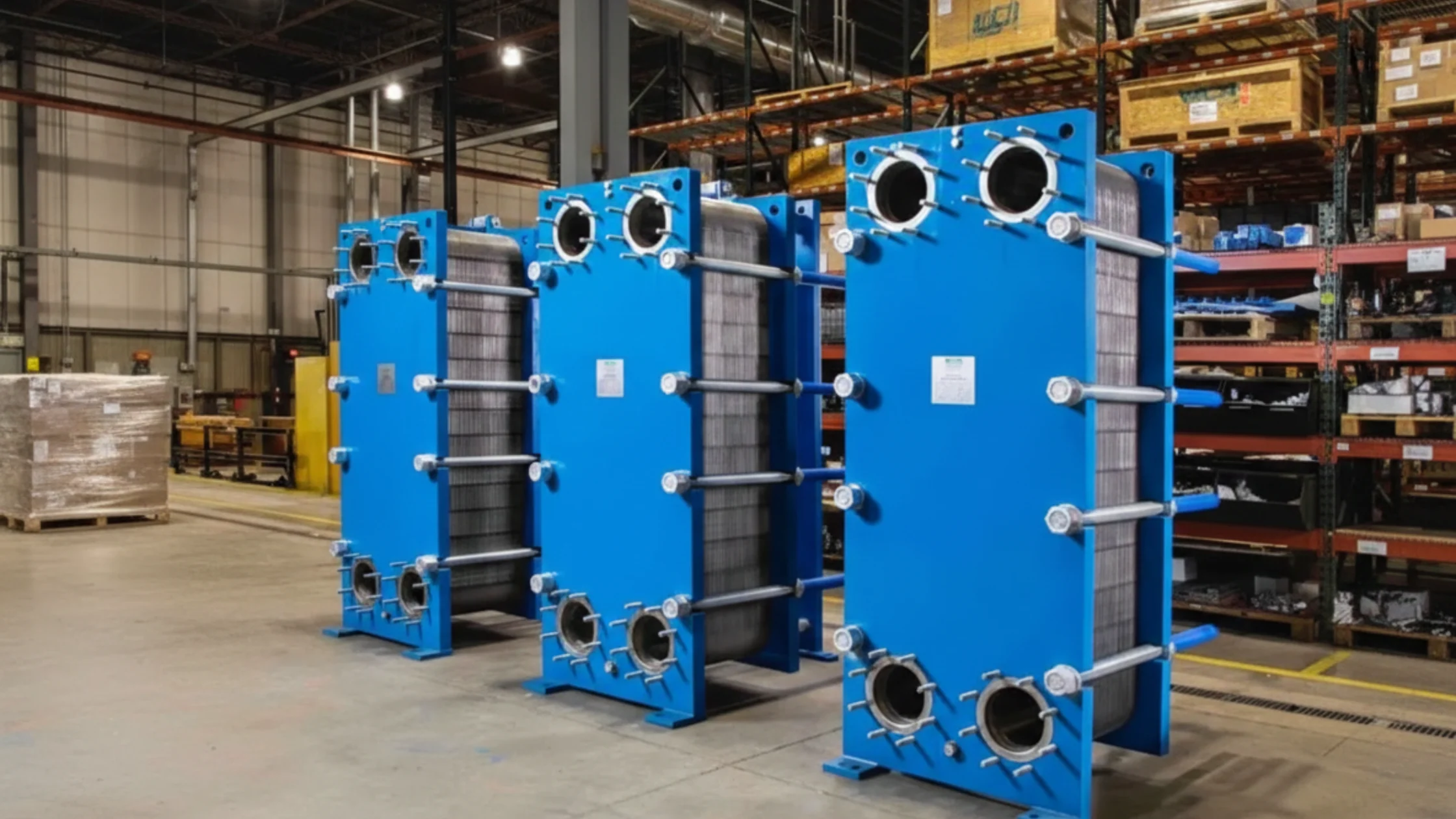
A stack of thin, corrugated metal plates clamped together in a frame makes up a plate heat exchanger.
Each plate has:
- A specific pattern (corrugation) to create turbulence
- Gaskets or seals that guide the flow path
- Openings at the corners to allow fluid to enter and exit
The plates form alternating channels so that one fluid flows in every other gap, while the second fluid flows in the gaps in between. Heat moves through the metal plates from the hotter fluid to the colder one – quickly and efficiently – without the two ever touching.
In industrial settings, this design creates a very compact industrial plate heat exchanger that can handle high heat duties within a relatively small footprint.
How a Plate Heat Exchanger Works (Step by Step)
1. Two separate fluids enter the exchanger
The hot fluid enters through one connection, and the cold fluid enters through another. The gaskets and plate arrangement direct each fluid into its own set of channels. They never mix, but they pass very close to each other on opposite sides of the plates.
2. Turbulent flow improves heat transfer
The corrugated pattern on each plate forces the fluid to swirl and change direction instead of flowing straight. This creates turbulence, which:
- Breaks up boundary layers on the metal surface
- Increases the contact between fluid and plate
- Dramatically improves heat transfer compared to smooth channels
Because of this, a plate heat exchanger can achieve the same duty as a much larger traditional heat exchanger.
3. Heat passes through the plates
Heat naturally shifts from hot to cold as hot fluid flows along one side of a plate and cold fluid flows along the other. Heat conduction is quick because the metal plate is thin. One fluid has cooled and the other has warmed up by the time they both exit the unit.
4. Easy to adjust and maintain
One big advantage of plate heat exchangers is flexibility. You can:
- Add or remove plates to increase or reduce capacity
- Open the frame for cleaning if fouling or scaling occurs
- Replace gaskets or plates without changing the entire unit
That’s why a plate heat exchanger is often chosen in plants that expect process changes or future capacity upgrades.
Where Plate Heat Exchangers Are Used in Malaysia
Across Malaysia, plate heat exchangers are widely used in:
- HVAC systems – for chilled water, district cooling and heat recovery
- Food and beverage – pasteurisation, product cooling and cleaning solutions
- Palm oil and chemical plants – heating and cooling process streams
- Industrial utilities – boiler feedwater, cooling tower circuits and energy recovery
Plate heat exchangers collaborate with pumps, control valves, and other components in many of these systems. To effectively move hot or cold fluids through the process, for instance, they could be combined with industrial transfer pumps.
Why Choose ARES Plate Heat Exchanger?
An ARES plate heat exchanger is designed with industrial users in mind. The focus is not just on raw heat transfer, but also on:
- High thermal efficiency – more heat transfer in a smaller footprint
- Robust construction – plates and gaskets suitable for demanding fluids
- Serviceability – frames that can be opened for inspection and cleaning
- Scalability – plate packs that can be adjusted as plant demands grow
For plants that already use equipment like AODD pumps for fluid transfer, pairing them with a reliable industrial plate heat exchanger creates a more efficient and integrated thermal system. This combination helps improve energy use, stabilise process temperatures and protect downstream equipment.
Conclusion
A plate heat exchanger may look simple from the outside, but inside it is a carefully built stack of plates, channels, and gaskets that work together to transfer heat quickly and safely between two fluids.
Understanding how a plate heat exchanger works helps plant and maintenance teams in Malaysia choose the right model, operate it with confidence, and plan maintenance before issues cause downtime. A well-designed ARES plate heat exchanger provides efficient heat transfer, easier maintenance, and better long-term performance for your industrial needs.